For painters, electricians, plumbers, joiners and other fit-out trades. validait finds suitable trade lots in your region and reviews selection criteria, deadlines and evidence against your profile.
validait searches 54 procurement portals every day, from the EU's Official Journal and the German public procurement data service (Datenservice Öffentlicher Einkauf) to the platforms of federal states and cities, and filters the results against your company profile. New procedures can arrive in your inbox every morning.
Learn moreEvery requirement is matched against your profile, and for every assessment you see the source reference and the quote. Open questions appear as points to clarify.
Learn moreOfficial contract award data shows you who wins in your market, with which contracting authorities and with which partners.
Learn moreUpload concepts, price sheets and certificates as you already have them. validait uses them in every review.
Learn more Bill_of_quantities_trade_lot7.xlsx✓
 Trade_card.pdf✓
 Reference_list.docx✓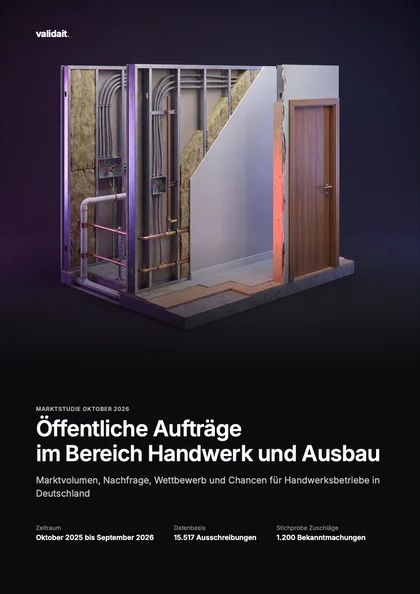
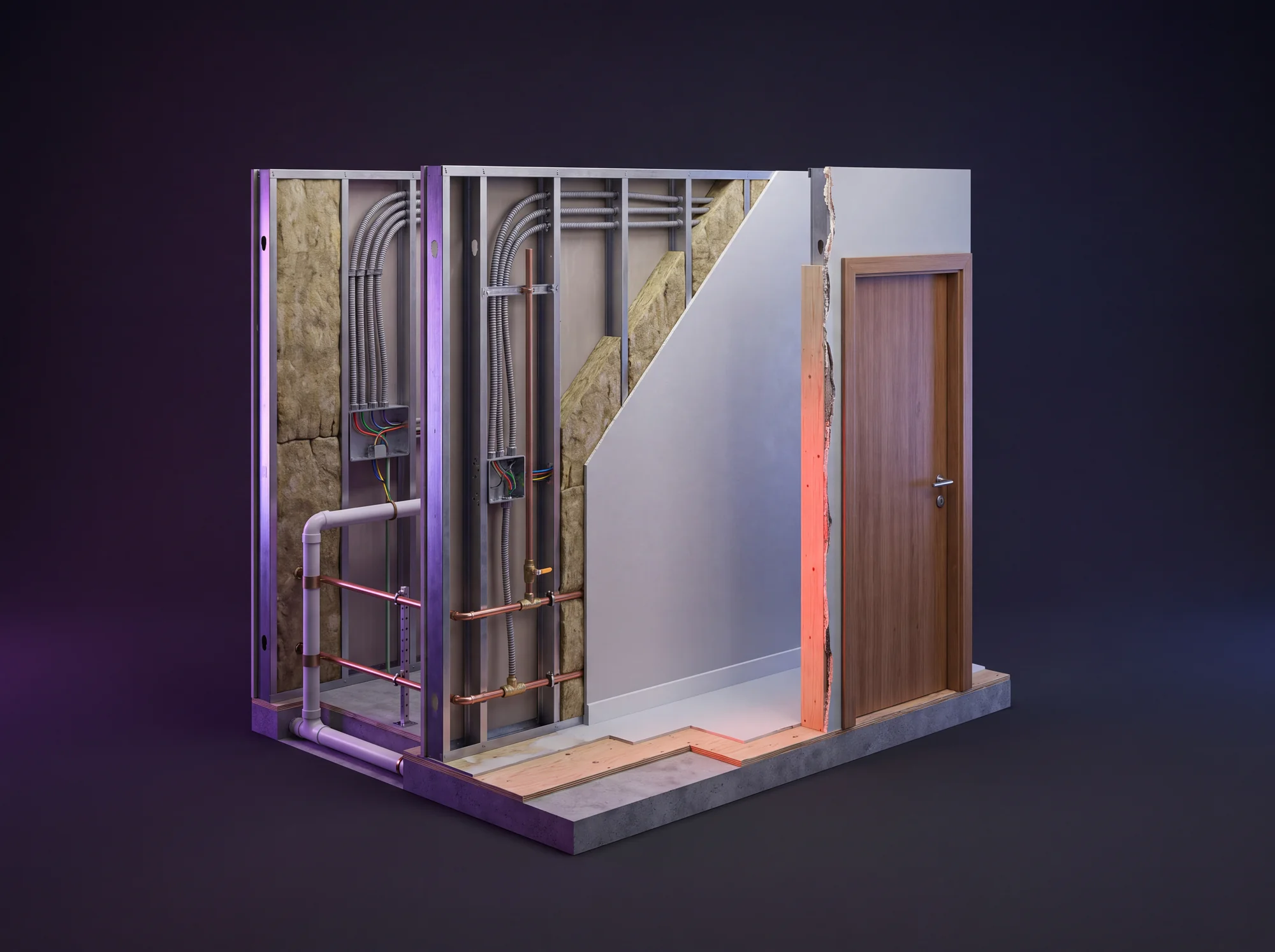
Market volume and trends, sub-markets, federal states, contracting authorities and procedures, intensity of competition, leading contractors, contract values, European comparison and concrete recommendations. Based on 15,517 tenders from the EU Official Journal.
Download the study (German)Source: EU Official Journal (TED), own analysis, October 2025 to September 2026, place of performance Germany. Methodology in the study.
Public construction contracts are generally divided into trade lots (Section 97a of the Act against Restraints of Competition (GWB)). Painting, electrical, plumbing, joinery and floor covering works are therefore awarded separately, and this is exactly what opens the way to large projects for medium-sized firms. In the EU's Official Journal alone, 15,517 calls for fit-out trades in Germany were published in twelve months.
Since January 2026, contracting authorities may award construction works up to €50,000 directly and up to €100,000 by negotiated award. For skilled trades businesses, this means that being visible to the contracting authorities in your own region pays off. How procedures below the EU threshold work is explained in the article on below-threshold procurement, and the page Construction and planning shows the new value limits to scale.
With an entry in the prequalification register, you prove your suitability once a year instead of again with every application. For businesses that bid regularly, this is one of the most effective levers. More on this in the article on prequalification.
If a lot covers several trades, businesses can join forces in a bidding consortium. This way, smaller businesses can also win contracts that would be too large for one firm alone.
The entry in the register of craftspeople, comparable references, a carefully completed bill of quantities and a realistic execution period.
Source: EU Official Journal (TED), own analysis, as of 10/2026. Procedures below the EU thresholds are published nationally and come on top.
For companies of any size that take part in public tenders regularly or want to start doing so. The criteria catalogue adapts to your profile, and you start with three free analyses per week.
From 54 connected procurement portals: the EU's Official Journal (TED), the German public procurement data service (Datenservice Öffentlicher Einkauf) with procedures below the EU thresholds, national platforms in five further countries and 44 portals of federal states, cities and public companies. You will find the full overview under Portal search. More on this under Finding tenders.
Usually within a few minutes. You receive a recommendation with source references and quotes that you can use directly in your bid preparation.
They are stored encrypted in Frankfurt am Main, strictly separated by company, and are never used to train AI models. Details on the security page.
validait compares the requirements with your company profile and shows you, with source references, where you already convince and what still needs to be clarified. Three analyses per week are free.
Try for free